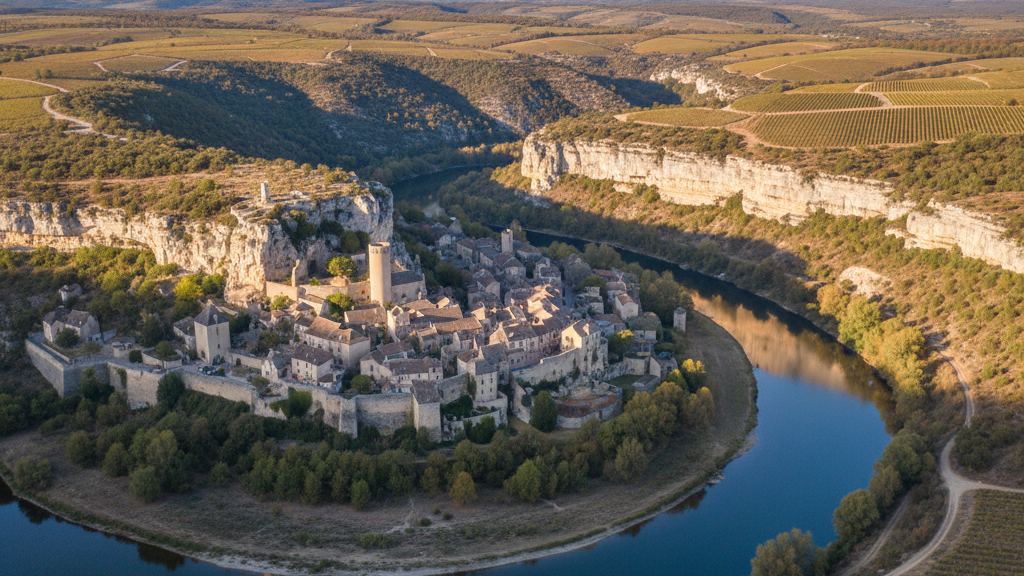
river fog to ten, walnut oil pressed in october
Reserve the Lot valley for a week, three weeks or a season
Slow Latitudes reserves one stone house in a village of about ninety people on the Lot, in southwest France, for seven nights, twenty-one nights or a season of fifty-six, from $2,415 per person with two sharing. The reason to settle the length before the house is that this valley runs on a calendar of fortnights: grapes from about 10 September, walnuts at the end of that month, saffron before dawn in the last days of October, truffle stalls on Tuesday afternoons from December to March. A week catches one of those; a season catches the tired fortnight afterwards, which is when people begin talking to you.
Reserve your weeksA reply is written within one business day, by a person.
Reserve a stay in the Lot valley and the question that settles everything else is not which house but how many nights. Slow Latitudes holds one stone house in a village of about ninety people, forty minutes upstream of the valley town, and lets it for seven nights, for twenty-one nights, or for a season of fifty-six. Those are three different products. The house is the same house.
A week here is a list of errands. You drive in from the arrival city, you find the bread van, you walk the towpath that was cut into the cliff below the village in the 1840s so that horses could pull barges through a gorge with no bank, you get to one market, and on the seventh morning you strip the bed. There is nothing wrong with that week. But this valley runs on a calendar of fortnights: grapes from about the tenth of September, walnuts from the end of that month, saffron flowers picked at first light in the last days of October, truffle stalls on the plateau opening with a whistle at half past two every Tuesday afternoon from December until the first week of March. Seven nights catches one of those, or none of them.
Twenty-one nights catches the run-up and the week after. Fifty-six catches the fortnight when everybody is too busy to speak to you, which is the fortnight after which they do.
A week
7 nights7 nights, from $2,372 per person.about $339 a night
Seven nights gets you one Wednesday market at the valley town, the towpath cut into the cliff below the village, one afternoon on the plateau among the dolmens and the dry stone huts, and whatever weather that particular week happens to hand you.
Three weeks
21 nights21 nights, from $5,754 per person.about $274 a night
By the third week the woman on the bread van puts the big round loaf aside for you on Friday because she brings eleven and they are gone by nine, and you have seen the river at two heights, since two days of rain on the plateau lift it four feet in a night and take the gravel bar away for a week.
A season
56 nights56 nights, from $10,864 per person.about $194 a night
Only a season puts you here for a whole harvest rather than a harvest day, for the eleven mornings of tractors on the lane at six and the flat fortnight afterwards when nobody in the village wants to do anything at all, which is the fortnight in which they stop explaining things to you.
- What this office books
- Slow Latitudes reserves the house, the arrival meeting and the linen arrangement with the family that owns it, and reserves nothing else: not your air ticket, not your rental car, not your rail seat and not a table anywhere in the valley.
- Who books it
- Somebody reserving this wants a kitchen, a river and a run of ordinary mornings in one place, rather than a route with a different bed every third night.
- Why somebody picks elsewhere
- Take a different place if you want a coast, a town with something on every evening, or a stay where the walk up to the bread van is not 210 feet of climb.
- In the figure
- The stone house itself, two bedrooms, wood stove, walled yard and one parking space, for the whole of whichever length you take; bed linen and towels, changed weekly on the seven and twenty-one night stays and every second week on a season; all utilities, with an electricity ceiling that rises with the length of the stay and is written down before you commit; firewood from 15 October to 15 April, one load for a week and refilled through a season; the arrival meeting at the house with the owner or her son, about forty minutes, the same whatever length you take; a written note prepared for your exact dates giving market days, harvest weeks and what is shut, one page at any length; the kitchen box on arrival, bread, coffee, oil, salt, eggs and a bottle of the valley red, given once and not repeated; a key held by the neighbour two doors down for the whole stay; and the changeover clean, which happens once at the end of a week and once at the end of a season rather than eight times.
- Not in the figure
- Your own round trip air ticket from the American South, which this office does not arrange and which sits inside no figure on this page, $980 to $1,760 per person; a small rental car, which you will need every day here, $310 to $480 a week or $1,120 to $1,640 a month; fuel, about $85 a week at the mileage a valley stay really runs; the rail leg from the arrival city up to the valley town if you would rather not drive it, $38 to $74 per person each way; food you cook at the house, $110 to $185 per person a week; eating out, $26 to $52 a head for a set lunch or a dinner in the valley; the tourist tax the commune collects at the house, about $1.30 per adult per night; canoe hire from the yard by the bridge between May and September at $28 a half day, and bicycles at $22 a day; and the deep clean after a season, $210 to $260, billed once by the owner.
- Who should not book it
- This is the wrong reservation for anyone who does not drive: the village has no shop, the nearest full grocery is nine miles down the valley, and the bus runs twice a day on school days and not at all on Sunday. Almost nobody in the upper village speaks English, and the market, the bread van and the water bill are all conducted in French at speed. The walk from the house to the top of the lane is 210 feet of climb in a quarter of a mile, the stone floors stay cold from November to March, and the commune drops the water pressure in the upper lane for two hours most August afternoons, so you fill jugs at noon and keep the shutters shut. And a season here is mostly ordinary days; if you want something arranged for you every morning, seven nights is the honest length to take.
Each figure is a starting point for two people sharing one room. Costing the exact weeks you name takes two to four working days: the letting company must answer before a number exists, and an air ticket is never folded into one.
Limestone, the river, and the plateau above it
The river runs west through limestone, with a cliff on the outside of every bend. The plateau on either side stands at about 1,050 feet and the water at about 400, so every road out of the valley climbs six hundred feet in under two miles, in hairpins, with passing places rather than two lanes. Down on the floor there is river silt, vines, and the dark red wine the growers here have made from one grape for eight hundred years. Up on the plateau there is grass three inches deep over bare rock, dry stone walls, sheep, and oaks kept short because the soil will not carry anything taller. There is no surface water at all up there. The ponds are rectangular basins cut into the rock by hand so that flocks could drink, and you can walk five miles across the top and pass one building, a round hut with a corbelled stone roof put up by somebody who needed shade at noon.
The villages come in two kinds. On the floor there are bastides, laid out on a grid in the thirteenth and fourteenth centuries around a square with a covered hall that is still the market. Above them are hamlets of eight or ten houses with a well and a shared bread oven. The house is in the second kind, at 830 feet, on a lane the postal van has to reverse out of. There is no shop. The bread van stops at the top of the lane on Tuesday and Friday at about a quarter past eight and is gone by nine. Full groceries are nine miles down the valley, and that store shuts from 12:30 to 3:00 and all day Monday, as does almost everything else.
- January
- Frost most mornings on the floor, the river high and the color of milky tea; truffle stalls on the plateau open with a whistle at 2:30 on Tuesdays
- March
- Blackthorn out along the walls, ewes lambing on the plateau, light until seven, first asparagus at the Wednesday market
- May
- Wild orchids on the thin grass above, more than thirty kinds of them; days about 70 F and nights still 45 F
- June
- Light until nearly ten, hay cut in the field below the house, and the gravel bar warm enough to swim off in the last week
- August
- Afternoons 88 to 95 F, everything shut 12:30 to 3:00, water pressure dropped in the upper lane for two hours, and the village meal under the plane trees in the second week
- September
- Grapes from about the tenth and eleven days of them, tractors on the lane at six, walnuts starting at the end of the month, nobody with a spare minute
- October
- Saffron flowers picked before sunrise in the last days, walnut oil pressed in the valley town, fog on the river until ten
- December
- Sun up at 8:35 and gone by 5:30, both restaurants shut for a fortnight, the stove lit by four, truffle Tuesdays under way
Seven nights, and what a week reaches
Seven nights works out at $345 a night per person with two sharing. Inside it you can reasonably expect one market at the valley town on the Wednesday or the Saturday; the towpath walk, two and a half miles out from the bridge with three hundred feet of rock over your head and no gradient at all; the fortified bridge in the valley town, six arches and three towers, begun in 1308 and forty years in the building; one afternoon on the plateau among the dolmens; one swim off the gravel bar if you come between the last week of June and the middle of September; and three or four dinners cooked out of whatever that one market had.
What a week cannot do is wait. If the second and third days are wet, and in April and October they can be, a third of the stay has gone, and you will spend the rest of it driving to the two or three things you decided on before you came. A week also arrives and leaves on the same day of the week as everybody else, which means Saturday, which means the road from the arrival city is full and the house is being cleaned as you pull up.
The third week, when the loaf gets put aside
Twenty-one nights works out at $274 a night per person. The change from a week is not scenic, it is administrative. In the first week you buy bread when you remember it; by the third the woman on the van knows you take the big round loaf and keeps one behind the flap on Friday, which matters, because she brings eleven up the hill and they are gone by nine. In the first week you drive to the market; by the third you know that the second and third stalls on the left are one family, that the melons on the third came off the field the evening before, and that the garage in the valley town will put air in your tires without an appointment but locks up at 11:45.
The river changes too. Two days of rain on the plateau in October will lift the water four feet in a night and turn it opaque, and the gravel bar you swam off is under it for a week afterwards. Somebody here for seven nights sees one river. Somebody here for twenty-one sees a river as a thing that does something. The same goes for the walnut trees along the floor: in the first week they are trees, and by the third the nets are down under them and there are men with poles in the branches at half past seven in the morning.
A season in one village
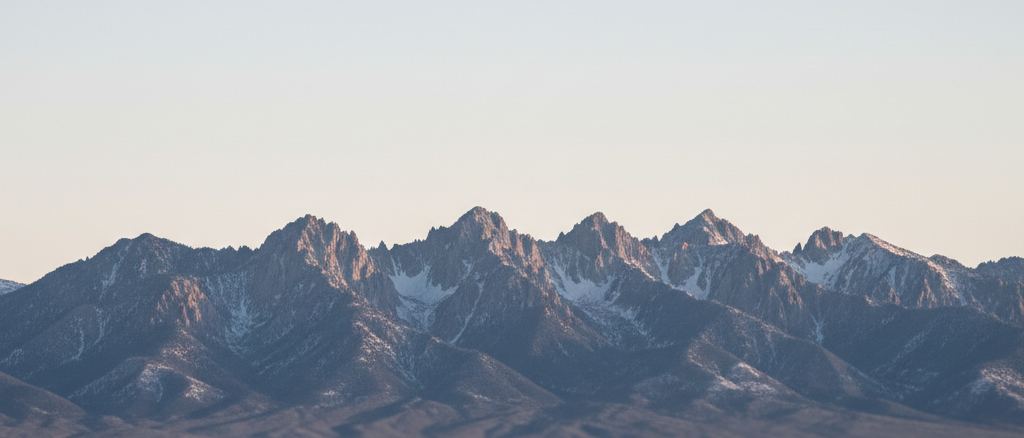
Fifty-six nights works out at $194 a night per person. The three figures are not the same because a room let for eight weeks is not stripped, cleaned and let again every Saturday; there is one changeover instead of eight, and the family that owns the house prices it that way.
What a season buys is a routine, and the end of your novelty. Somewhere in the fifth or sixth week people stop explaining the village to you. The landlady stops itemizing the laundry and tells you to use the line in the yard. The man who cuts the hay in the field below asks you on the Tuesday to move the car on the Thursday, instead of leaving a note under the wiper. You are seated at the long table at the village meal in the second week of August, at about ten dollars a head, rather than pointed at a spare chair. And you are here for the whole of a harvest instead of a day of it: the eleven mornings of tractors on the lane at six, the smell over the entire floor of the valley, and the flat fortnight afterwards when the two restaurants are half empty and nobody wants to do anything.
Most of a season is ordinary. Out of fifty-six days, perhaps ten are the sort you would describe to somebody at home. The rest are a walk, a shop, an afternoon too hot to be outdoors between one and five in July, and a long light evening in June. If that reads thin, take the week instead; it is a perfectly good week.
Slow Latitudes takes the dates you name and places the reservation with the family that runs the house. They invoice you directly, on their own paper, and they hold the contract for your stay. No airplane, no bedroom, no boat and no vehicle in this valley belongs to this company. Getting to France is your own arrangement, and there is no air ticket inside any figure on this page. Entry rules are a matter between you and the authority that issues the documents, and this office does not advise on them.
Putting a firm number on the exact weeks you name takes two to four working days at this end, because the house is priced by the part of the year it falls in and the family answers in the evening. Tell us the dates and how many of you there are. Slow Latitudes is the name used by Slow Latitudes Bookings LLC, at 9422 Common Street, Suite 2, Baton Rouge, LA 70809, in East Baton Rouge Parish, Louisiana; the telephone is +1 (225) 766-2418. Write to bookings@slowlatitudes.com with your weeks, or to corrections@slowlatitudes.com if anything on this page is wrong and ought to be corrected.
Ask this office to reserve your weeks
The form below is open every hour of every day, and what it collects is read by a person, who replies within one business day. Nobody is committed by sending it, nothing is charged for it, and no call or message goes out from here unless you ask for one.